
Are Casinos Marketing to the Wrong Player Mindset?
Casinos have spent decades marketing the possibility of winning. But Catalyst Marketing’s national research reveals that what makes players feel lucky extends beyond jackpots, prizes, and gaming outcomes.
58% BELIEVE LUCK MATTERS
58% of casino gamers believe luck affects their gaming success either completely or a great deal.
But what actually makes players feel lucky?
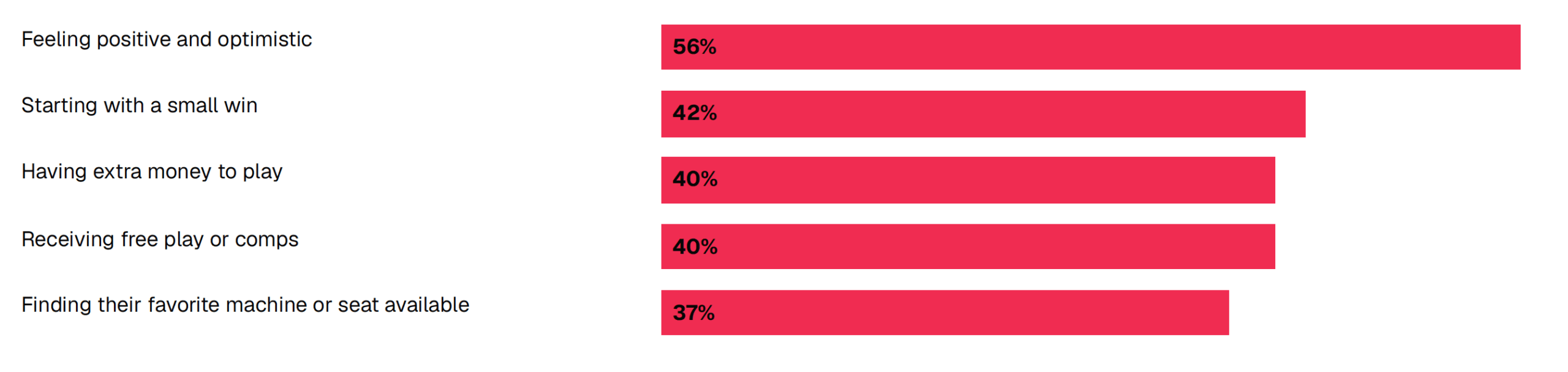
What Makes Players Feel Lucky Before They Play?
The Insight: Optimism Outranks Incentives
Feeling positive and optimistic ranks higher than receiving free play or comps as a factor associated with feeling lucky.
For marketers, this opens an opportunity to connect through anticipation and positive experiences, not just jackpots and promotional offers.
The Insight: Familiarity and Ritual Matter
Personal routines and superstitions shape how players experience gambling, even though they don’t change the odds.
These behaviors offer another perspective on player motivations that traditional gaming and visitation data may not fully explain.
The Power of Player Rituals
Players bring their own unwritten rules to the casino floor.
-
51%: Would never leave their seat during a hot streak.
-
37%: Would never talk about winning before it happens.
-
37%: Would never count their money while playing.
-
29%: Would never let someone else touch their machine or
cards.
Luck Looks Different by Generation
While belief in luck remains strong across all age groups, what makes players feel lucky varies significantly by generation.
Younger players are more likely to associate luck with social connections and personal rituals, while older players place greater emphasis on tangible rewards and familiar gaming experiences.
What Makes Each Generation Feel Lucky?
18–29 | Social & Superstitious
More likely to associate luck with companions, lucky charms, clothing, and personal rituals. Less likely to associate it with free play and comps.
30–39 | Positive Energy & Rituals
More likely to associate luck with optimism, good days, social connections, and lucky traditions.
40–49 | Routine & Readiness
More likely to associate luck with extra spending money, companions, personal rituals, and preferred playing times.
50–59 | Optimism & Early Wins
More likely to associate luck with a positive mindset and starting with a small win.
60–69 | Less Ritual-Driven
Less likely to associate luck with social connections, lucky charms, routines, and specific playing times.
70+ | Rewards & Familiarity
More likely to associate luck with free play, comps, and favorite machines or seats. Less likely to associate it with rituals and social factors.
The Marketing Insight
Luck isn’t one-size-fits-all.
Different generations associate feeling lucky with different experiences. For casino marketers, this creates an opportunity to move beyond universal luck-themed messaging and develop creative that reflects the motivations of specific audiences.
Findings reflect statistically significant differences by age, not necessarily the most common response within each group.
What This Means for Casino Marketing
- Rethink the Creative
Test messaging built around anticipation, optimism, and entertainment alongside traditional jackpot and promotional creative. - Segment by Motivation
Move beyond demographics and gaming activity. Use attitudinal research to understand what different players associate with a positive casino experience. - Measure What Moves Players
Identify which messages generate incremental visitation and guest value, not simply clicks, impressions, or promotional redemptions.
The Takeaway
Casinos have always marketed luck. Maybe it’s time to understand what makes players feel lucky.
The opportunity isn’t to promise better odds. It’s to develop marketing that connects with the emotions, expectations, and motivations behind a casino visit.