

Casino Advertising Isn’t Competing for Awareness. It’s Competing for Perceived Value.

We recently asked players a simple question: “What makes tribal casino advertising catch your attention?”
The answer challenges one of the most persistent assumptions in casino marketing.
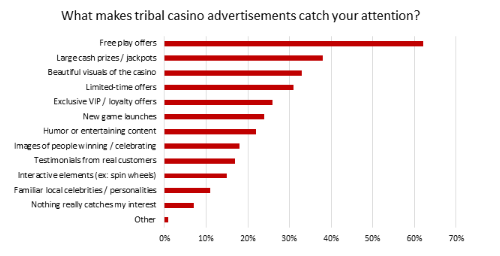
Attention is not primarily driven by brand storytelling, entertainment value, or production quality. Players are evaluating whether an offer signals real value. Advertising must communicate economic relevance, not just creative presence.
However, what signals value is not static.
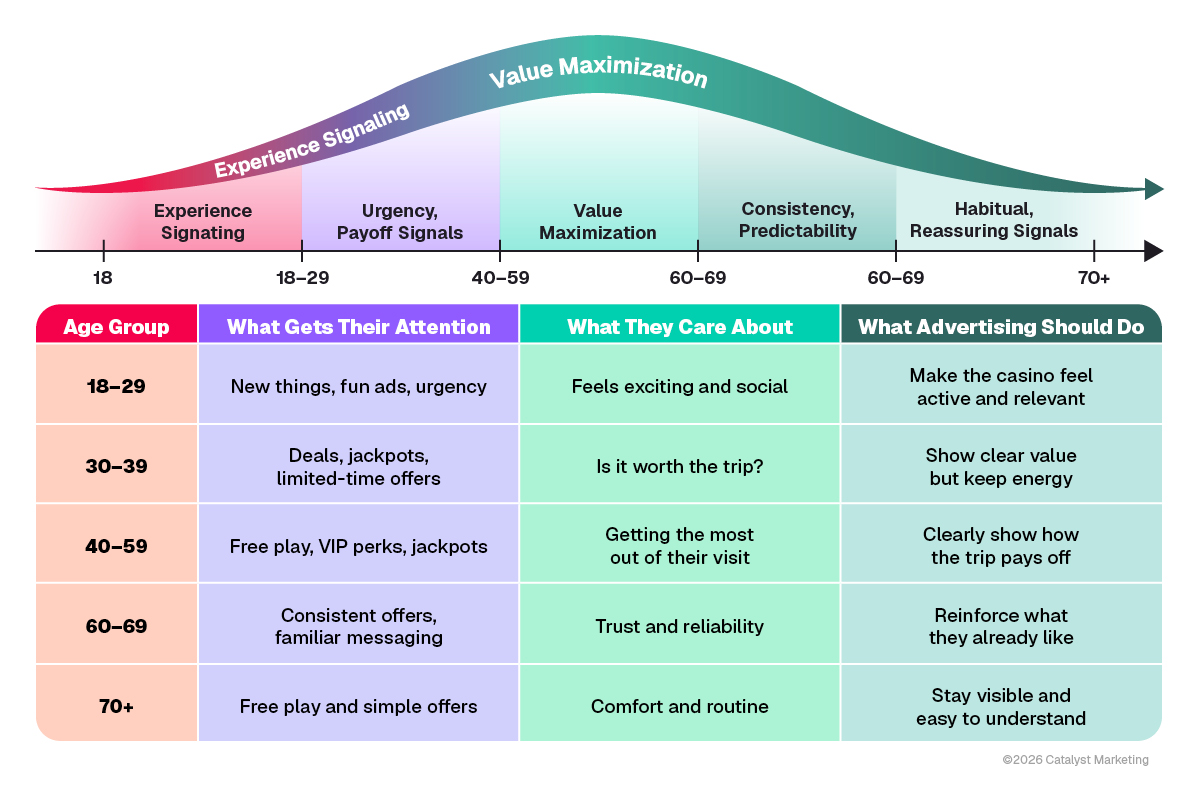
Our research shows that advertising effectiveness shifts across the gaming lifecycle. While value remains the constant, how players recognize and respond to that value evolves with age, experience, and visitation maturity.
Younger players look for signals of energy and experience before processing the offer. Mid‑life players increasingly evaluate whether the trip makes financial sense. More mature players rely on habit, where advertising serves more as reassurance than persuasion.
A long‑standing industry convention illustrates this shift. Visuals of people winning or celebrating have been a staple of casino advertising for decades, yet fewer than one in five players say this imagery meaningfully captures their attention.
To illustrate this dynamic, we developed an Advertising Lifecycle framework showing how attention drivers evolve as gamers mature.
Below is the supporting framework outlining how key advertising levers index across age cohorts.
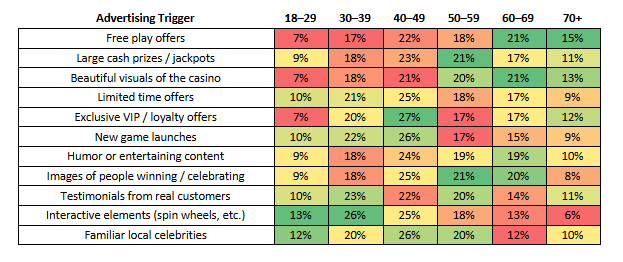
Understanding where your audience sits along this lifecycle can help align creative strategy, offer design, and media investment with how players actually make visitation decisions.
At Catalyst Marketing, we’re here to help you stay ahead of the latest trends and advertising opportunities. We partner with Native American casinos to build adaptive, resilient strategies that drive sustainable growth.
Want to learn more? Catalyst is here to help. Contact us at info@teamcatalyst.com.